
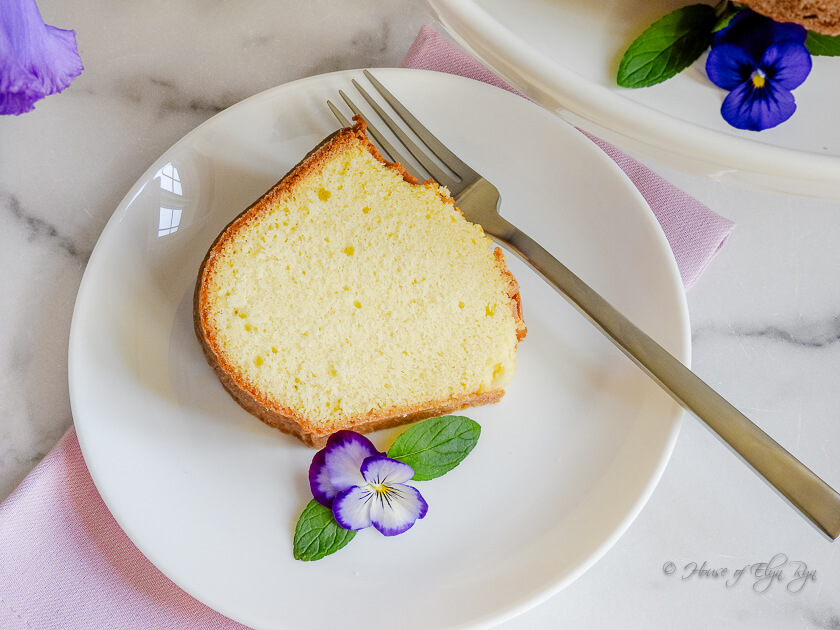
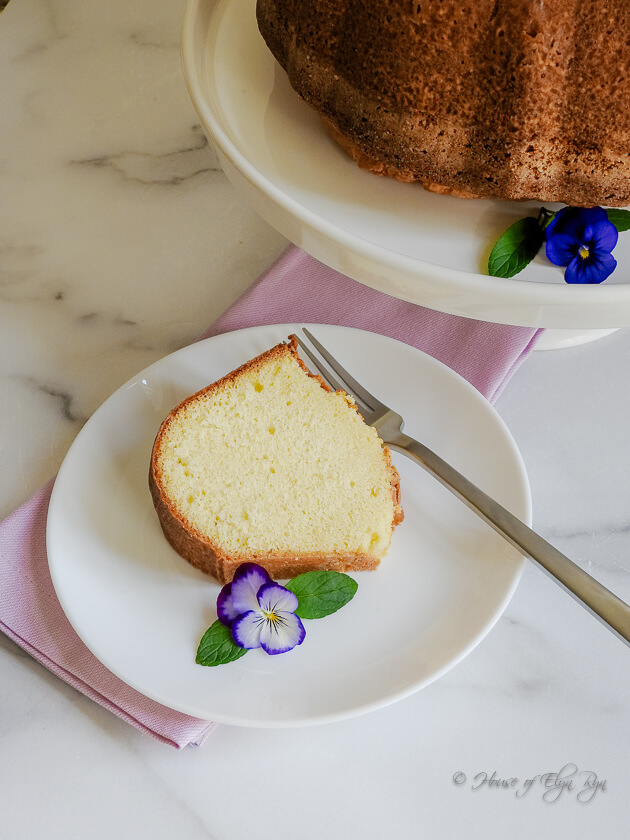
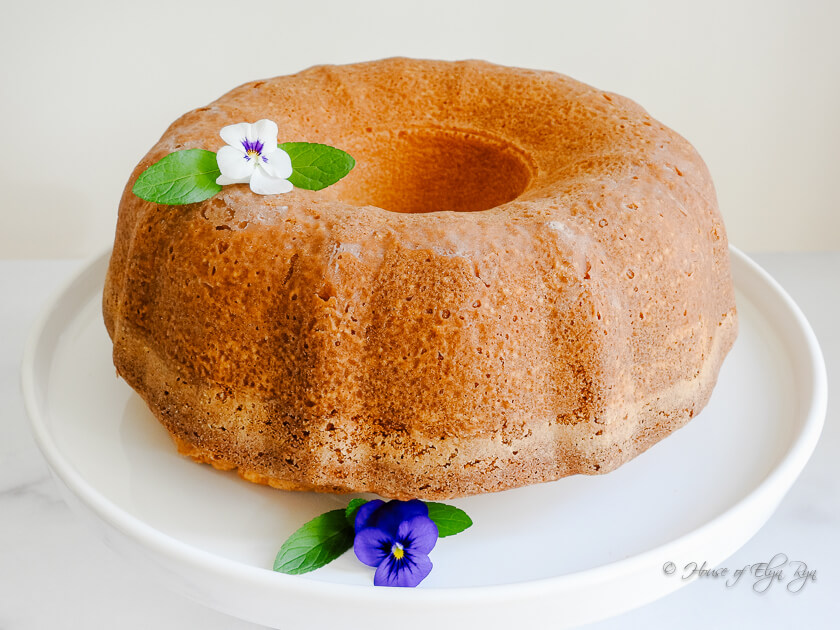
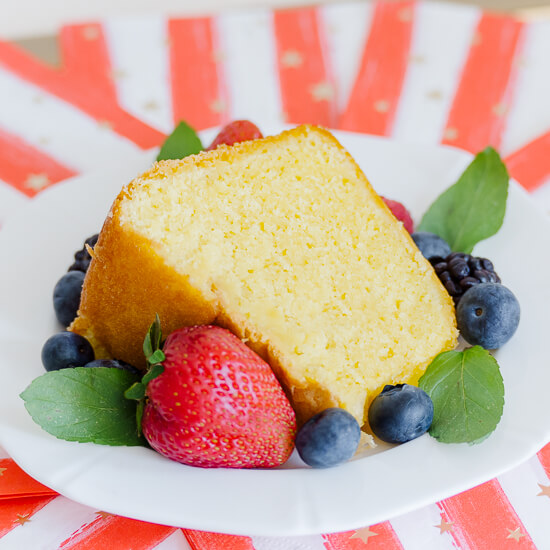
This buttermilk almond pound cake has a fine texture and a tender, almond-flavored taste. Serve warm for a delicious treat!
Chemistry of Baking
The first time I made this cake, I thought I had gotten the amount of buttermilk wrong. I poured one cup of buttermilk into a 2-cup glass measuring cup and added the baking soda per the directions. I turned my back to tend to something for a moment. When I returned my attention to the buttermilk and started to pour it into the measuring cup, it read 1 2/3 cups. I thought I had measured too much buttermilk. Or had I? In reality, the baking soda had reacted with the buttermilk, producing bubbles that raised the buttermilk another 2/3 cup! Those same bubbles help raise this cake during baking.
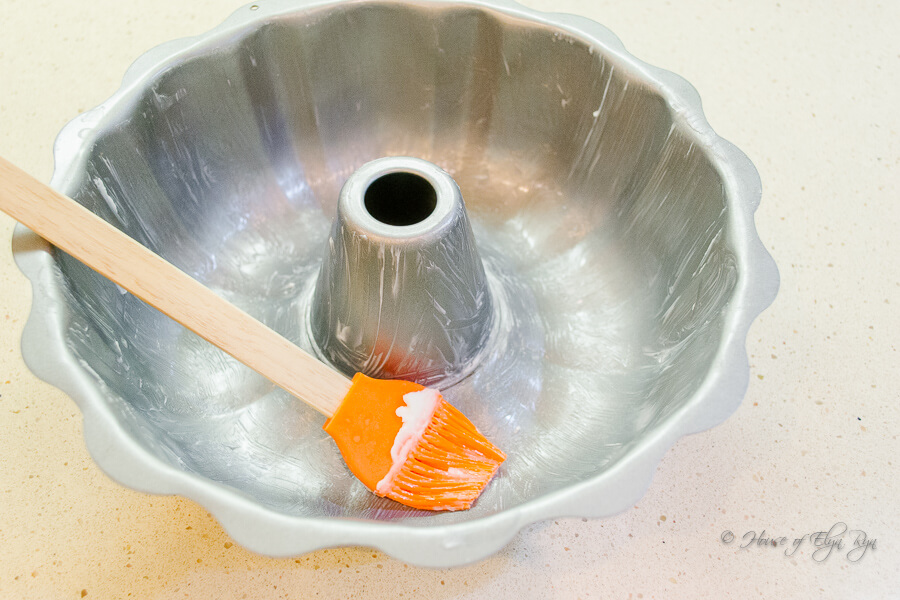
Greasing the Pan for Buttermilk Almond Pound Cake
I have found the best and quickest way to grease a cake pan is to use a brush. It makes it easy to reach all the crevices and corners. When you add the flour, you can see if you missed any areas. If so, brush and flour again.
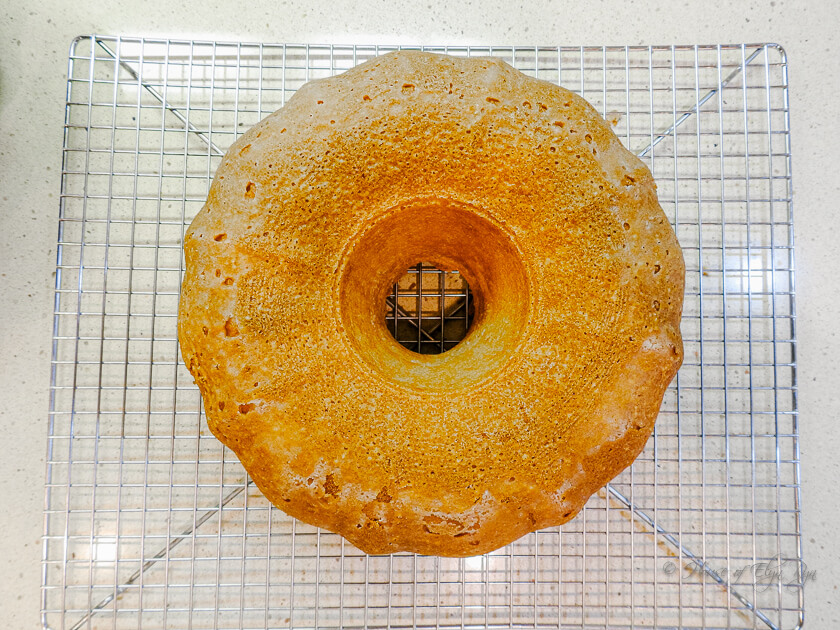
Cooling the Buttermilk Almond Pound Cake
To get the cake out of the pan, follow these steps:
- Let the cake cool for 10-15 minutes after you remove it from the oven.
- Run a small cake-release spatula or knife between the cake and the pan to loosen it.
- Place a cooling rack on top of the pan and flip the pan and rack together.
- Tap the rack onto the countertop to help loosen the cake from the bottom of the pan. (The cake should release easily if you grease and flour the pan well.)
- Let the cake cool on the rack.
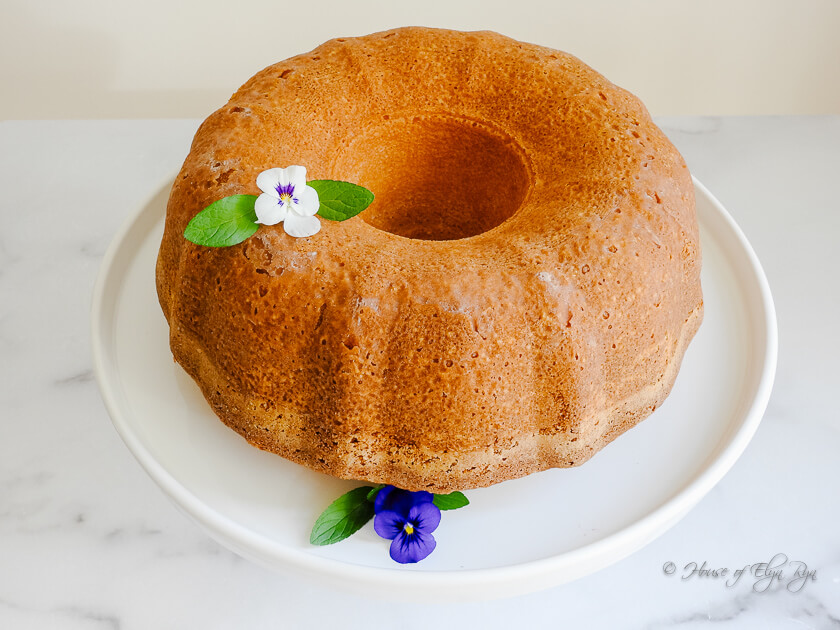
Baking Notes for Buttermilk Almond Pound Cake
- When using buttermilk in a recipe, shake it before using, as it will separate after sitting.
- For a light and fluffy cake, use cake flour. It has a lower protein content than all-purpose flour, making it ideal for tender cakes.
- To make a vanilla pound cake, omit the almond extract and use 1 tablespoon of vanilla extract instead.
Stopping Additional Gluten Formation
Many recipes say to alternate the flour and milk additions to the butter. This is to prevent excess gluten formation. When you mix flour and a liquid, it forms gluten. If you add the flour to the creamed butter, the butterfat coats the flour, preventing gluten from forming. When you end with flour, it gets coated with the batter’s fat.
Why is this important? Because gluten makes cakes tough. Think about pizza dough that has a chewy texture. This texture arises because the dough has been worked to develop the gluten. With cakes, alternating flour with a liquid helps to prevent the gluten from further developing.
Other Cakes You Might Like
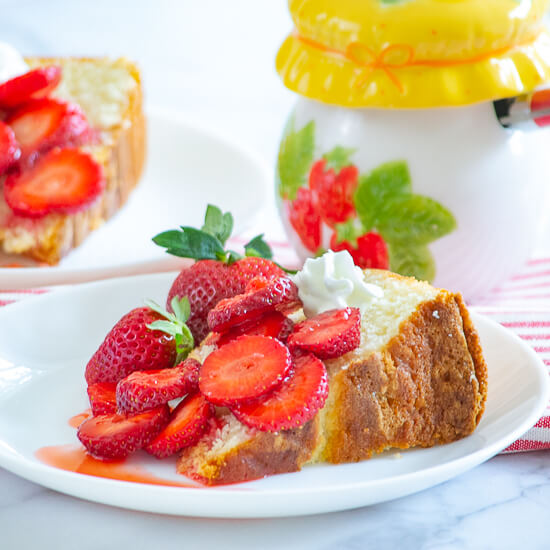

Buttermilk Almond Pound Cake
Ingredients
- ½ cup butter, softened
- ½ cup shortening
- 2 cups sugar
- 4 large eggs
- 3 cups cake flour, sifted
- ⅛ teaspoon salt
- 1 cup buttermilk
- ½ teaspoon baking soda
- 1 teaspoon vanilla extract
- 2 teaspoons almond extract
Instructions
- Preheat the oven to 350°F.
- Use a silicone brush to grease, then flour, a cake tube pan that has a hollow center.
- In a mixing bowl, beat the butter and shortening until creamy and smooth. Add the sugar a little at a time until it is all added. Beat for 5 minutes.
- Add the eggs one at a time, beating only until the yellow disappears after each egg.
- Measure out 3 cups of flour and then sift it and the salt together into a separate bowl.
- Shake the buttermilk container to mix it well. Then pour 1 cup into a 2-cup glass measuring cup. Add the baking soda and stir until dissolved. The mixture will rise as a reaction takes place between the buttermilk and baking soda.
- Alternate adding the flour and buttermilk to the batter, starting and ending with flour. Beat on low speed after each addition, being careful not to overbeat.
- Stir in the vanilla and almond extracts.
- Pour the batter into the prepared cake pan. Bake for 55-60 minutes or until a toothpick inserted into the center comes out clean. If the top of the cake is getting too brown, add a greased sheet of aluminum foil to the top of the cake pan.
- After removing the cake from the oven, let it cool for about 10 minutes. Then carefully turn it out onto a wire rack and let it finish cooling.